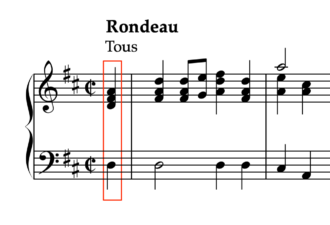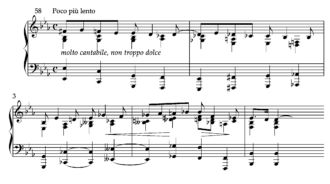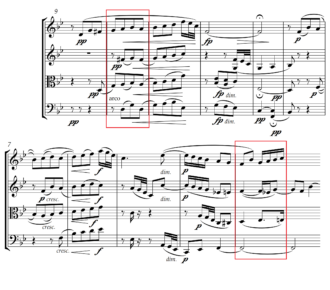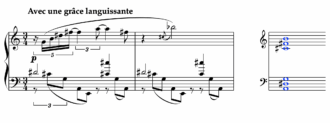
Take a journey of discovery in the classical music harmony! In this book, Thomas Solak, associate professor of music theory at the Royal Danish Academy of Music, conveys a framework of understanding that puts the experience at the center of the harmonic analysis. Functional harmonics is in this perspective not only a formal system, but also a tool for perception and understanding of harmonic common features: Through the book’s almost 200 examples, just as many years of music are highlighted, and along the way the reader gradually becomes familiar with the analysis form’s ability to describe harmonics. on a deeper level. Functional harmonics – a guide to experience-oriented analysis is aimed at anyone who is professionally involved with music and who wants to strengthen the awareness of its harmonic aspects.
The Origin and Possible Usage of Transgressio in Music Theory Classes
Source(s) of analysis: Score Musical work: 3 Rosenkavalier, Concerti musicali Op. 6 No 7 (3rd movement), Piano Concerto KV 414, Solche hergelaufnen Laffen / Die Entführung aus dem Serail, Stabat mater, Symphony 86, Trio Sonata Op. 4 No. 1 (3rd movement), Trio Sonata VII/2 Op.3, Von den Stricken meiner Sünden / St. John Passion Year of creation: 1689, 1694, 1698, 1724, 1736, 1782, 1786, 1911 Composer's name: Bach, Corelli, Haydn, Mozart, Pergolesi, Strauss, Torelli Methods of analysis: Conventional / Traditional analysis, Rhetoric analysis, Structural analysis, Style analysis
Target Group / Study LevelLevel of music analysis knowledge: Beginner, Intermediate
Study cycle: Bachelor
Read more