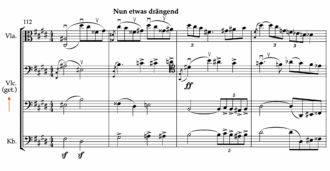
Adorno’s purpose in these lectures, presented at the Darmstadt International Summer Courses for New Music in the fall of 1966, was to address the relationship between what he called “sound” and “structure.” At the heart of his thinking is the notion of “structural instrumentation”—the ideal of organizing timbre in a manner commensurate to the compositional logic (Satz) of a given work. Following a historical survey of orchestration and instrumentation in the music of Bach, Viennese Classicism, and the New German School, Adorno turns at length to the “new music,” and above all the work of the Second Viennese School. Ending with a brief consideration of the experiments in Klangkomposition undertaken by composers such as Stockhausen and Ligeti, Adorno challenges the younger generation of composers who held court at Darmstadt by calling into question the equality of timbre with other musical parameters.