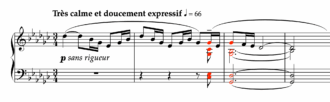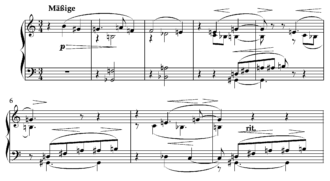
The Holy Year of the Extraordinary Jubilee 1879 is a significant year for Franz Liszt’s religious vocal compositions. His Passion entitled Via crucis (S. 53), three minor choral works (O Roma nobilis, Rosario, Ossa Arida, S. 54–56 ), two songs (Sei still, and Gebet, S. 330–331), and Cantantibus Organis (S. 7), took their final form. In many of these works, it can be observed that when Liszt wanted to emphasize an important detail from the sacred text, the accompaniment disappeared, like in Station XII of the Via crucis, Jesus’ cry (’Eli, Eli’). At the end of this same Station, the movement closes with a sixth chord, which gives me the impression that the pain of the movement has not been resolved by the end. The same is true of the end of Sei still, where resignation to God’s will does not make the grief of facing death definitively easy. In his book The Romantic Generation, Charles Rosen describes the ’aesthetics of the Romantic fragment’ related to compositions that seem unfinished or interrupted within the work itself (as if the accompaniment disappears): the work is a part of a larger idea, only an unrepresentable fragment of it, and it is the listener’s task to think about and fill in what they hear and what the composer does not say. All this can also be understood as a rhetorical device. This study aims to map Liszt’s sacred intonation from these aspects: at which points in the text does he use the aesthetics of a fragment and with what intention, and what does he want to emphasize? My view is that Liszt’s late works grew out of the profound, prayerful spirit that developed during his years in Rome.
The Romantic generation
The Romantic generation
The period spanning the deaths of Beethoven and Chopin provides a time frame for a discussion of the works of…
Music Analysis
Used by: Conservatoire royal de Bruxelles (BELGIUM)
Read more