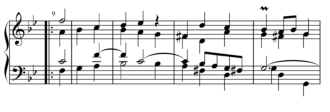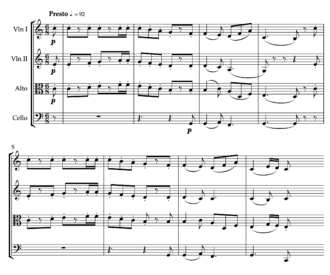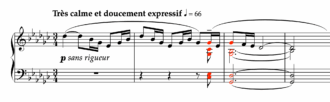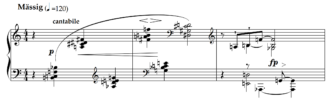
The author presents the principles of analyzing sonata form, based on his own concept regarding the essence of thematic dualism and the characteristics of classical sonata form, while referring to his formal analysis textbook. The analytical guidelines applied in teaching practice during the initial stage of education for students of all specializations encompass such features as: a close connection to the phenomenon of functional harmony, thematic dualism, an opposition relationship, a developmental nature of sonata form, including phased nature of the process, unidirectionality, material determinants between components and phases An example analysis at an elementary level concerns the form structure, thematic transformation and harmonic elaborations of the 1st movement of Beethoven’s Piano Sonata No. 1 in F minor.
Formy muzyczne
Musical Forms
The new completed and expanded edition of the manual for students which allows gaining knowledge about the concept of musical…
Music Analysis
Used by: Akademia Muzyczna im. Stanisława Moniuszki (POLAND)
Read more